Packaging 101: The Complete Guide
- Packaging 101
- Types of Packaging
- Aseptic Packaging
- Blister Packaging
- Biodegradable Packaging
- Bulk Packaging
- Carbon Neutral Packaging
- Circular Packaging
- Clamshell Packaging
- Compostable Packaging
- Cornstarch Packaging
- Corrugated Packaging
- Discreet Packaging
- Ecommerce Packaging
- Flexible Packaging
- Frustration Free Packaging
- Retail Packaging
- Secondary Packaging
- Smart Packaging
- Sustainable Packaging
- What is a PR Package?
- What is a Poly Mailer?
- Packaging Design Ideas
- AI Packaging Design
- Bakery Packaging Ideas
- Bath Bomb Packaging Ideas
- Bath Salt Packaging Ideas
- Body Butter Packaging Ideas
- Body Oil Packaging Ideas
- Body Scrub Packaging Ideas
- Brownie Packaging Ideas
- Cake Packaging Ideas
- Cake Pop Packaging Ideas
- Candle Packaging Ideas
- Candy Packaging Ideas
- Canva Packaging Design
- Chocolate Packaging Ideas
- Cinnamon Roll Packaging Ideas
- Clothing Packaging Ideas
- Coaster Packaging Ideas
- Coffee Bag Design Ideas
- Cookie Packaging Ideas
- Cosmetics Packaging Design
- Cotton Candy Packaging Ideas
- Cupcake Packaging Ideas
- DIY Packaging Ideas
- Dog Treat Packaging Ideas
- Food Packaging Ideas
- Empanada Packaging Ideas
- Etsy Packaging Ideas
- French Fries Packaging Ideas
- Frozen Food Packaging Ideas
- Hair Extension Packaging Ideas
- Handbag Packaging Ideas
- Jewelry Packaging Ideas
- Keychain Packaging Ideas
- Lash Packaging Ideas
- Lip Gloss Packaging Ideas
- Macaron Packaging Ideas
- Minimalist Packaging Ideas
- Mug Packaging Ideas
- New Employee Welcome Kit Ideas
- Packaging Colors
- Packaging Inserts Ideas
- Packaging Logo Design
- Packaging Typography
- Perfume Box Design Ideas
- Pizza Box Design Ideas
- Popcorn Packaging Ideas
- Scarf Packaging Ideas
- Skincare Packaging Design Ideas
- Soap Packaging Ideas
- Sock Packaging Ideas
- Sticker Packaging Ideas
- Sunglass Packaging Ideas
- Sustainable Packaging Ideas
- Tea Packaging Ideas
- Wax Melt Packaging Ideas
- Weed Packaging Ideas
- T-Shirt Packaging Ideas
- Wine Packaging Design Ideas
- What is a Packaging Engineer?
- Types of Packaging Materials
- Chipboard vs Cardboard
- Compostable Packaging Materials
- Alternatives to Plastic Packaging
- Edible Packaging Materials
- Food Packaging Materials
- Are Poly Mailers Recyclable?
- How to Recycle Cardboard Boxes
- How to Recycle Packaging Materials
- Medical Device Packaging Materials
- Mono Material Packaging
- Pharmaceutical Packaging Materials
- Plastic Food Packaging
- Protective Packaging Materials
- Reusing Packaging Materials
- Types of Packaging Foam
- Void Fill Packaging
- What is Chipboard?
- What is Kraft Paper?
- Offset vs Digital Printing
- RGB vs CMYK Printing
- Screen Printing vs Digital Printing
- Screen Printing vs Sublimation
- What is a Dieline in Packaging?
- What is Die Cutting?
- What is Digital Printing?
- What is Flexographic Printing?
- What is Glassine Paper?
- What is Offset Printing?
- What is Spot UV Printing?
- Why is 300 DPI Good for Printing?
- How to Estimate Shipping Costs
- How to Pack Glass for Shipping
- How to Mail a Bubble Mailer
- How to Make a Shipping Label
- How To Measure Box Dimensions and Sizes
- How to Ship Alcohol
- How to Ship Artwork
- How to Ship Books
- How to Ship a Cake
- How to Ship Candles
- How to Ship Chocolate
- How to Ship Clothes
- How to Ship Cookies
- How to Ship Food
- How to Ship a Hat
- How to Ship Jewelry
- How to Ship a Laptop
- How to Ship Perfume
- How to Ship a PC
- How to Ship Perishable Food
- How to Ship Plants
- How to Ship Shoes
- How to Ship Vinyl Records
- Packaging Symbols
- Shipping Large Items
- What is a Delivery Exception?
- What is Shipping Insurance?


Britt Martin, Arka's Partnerships lead, blends e-commerce expertise with sustainability advocacy, nurturing startups as a Founder in Residence at NYU.
What Does Frozen Food Packaging Need to Do?
Frozen food packaging needs to block air and moisture, stay strong at freezing temperatures, and tell shoppers what they are buying and how to cook it. It also has to fit easily in a home freezer.
Strong frozen food packaging does five things:
-
Seals out air: airtight seals and barrier films limit freezer burn.
-
Survives the cold: materials stay strong and labels stay stuck through frost and condensation.
-
Protects the food: trays and cartons stop crushing and breakage.
-
Informs: the label shows storage and cooking instructions, ingredients and allergens.
-
Sells: bold, clear design is easy to spot through a freezer door.
How Does Packaging Prevent Freezer Burn?
Packaging prevents freezer burn by keeping air away from the food's surface. Freezer burn shows up as grayish-brown, leathery spots when food is not wrapped airtight. The FDA calls it a quality problem, not a safety problem. Food kept constantly at 0°F stays safe, but its quality drops over time.
The USDA notes that supermarket meat wrap lets air through. For long storage, it recommends overwrapping with heavy-duty foil, freezer wrap, freezer paper or freezer bags. For food brands, that makes vacuum sealing, airtight closures and barrier films worth the investment.
Frozen Food Packaging Materials at a Glance
Each material suits a different kind of frozen food. Learn more in our guide to food packaging materials.
|
Material |
Best for |
Why it works |
|
Vacuum-sealed pouches |
Meat, poultry, seafood |
Removes air to limit freezer burn |
|
Resealable stand-up pouches |
Vegetables, fruit, snacks |
Easy to reseal and store upright |
|
Thermoformed trays with film lids |
Entrees, sushi, desserts |
Holds portions in shape |
|
Microwave-safe plastic trays |
Ready meals |
Goes from freezer to microwave |
|
Aluminum trays |
Pies, casseroles, oven meals |
Goes from freezer to oven |
|
Coated paperboard cartons |
Pizza, entrees, ice cream |
Printable and moisture resistant |
|
Corrugated boxes |
Outer cases and shipping |
Strong for stacking and transport |
|
Insulated liners and foam coolers |
Direct-to-consumer shipping |
Keeps food frozen in transit |
General Frozen Food Packaging Ideas
1. Vacuum-Sealed Packaging
Vacuum-sealed packaging removes air before sealing, which makes it one of the most effective ways to limit freezer burn on meat, poultry and seafood. The tight film also shows the product clearly. The USDA advises freezing unopened vacuum packages as they are. Add your branding with a printed label or a cardboard sleeve.

2. Custom Printed Resealable Pouches
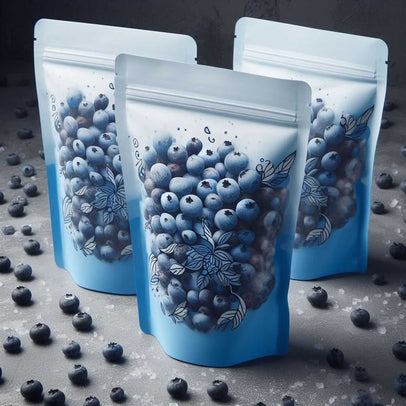
Stand-up pouches with a zipper let customers take what they need and reseal the rest. They lie flat or stand upright, so they save freezer space. Choose a film built for freezing, and print your logo, colors and a small clear window on the front. Learn more about flexible packaging.

3. Thermoformed Trays and Films
Thermoformed trays are plastic trays heated and shaped to fit a product, then sealed with a film lid. They hold entrees, desserts and sushi in neat portions and stack well in the freezer. Choose trays labeled for your cooking method, such as microwave-safe or dual-ovenable, which means safe in both oven and microwave. See our guide to plastic food packaging.

4. Clear Windows and Transparent Packaging
Clear packaging lets shoppers see the color, size and quality of the food before they buy. It works well for fruit, vegetables, dumplings and desserts. Frost can cloud a window, so keep the window small and put key information on the printed areas.

5. Custom Printed Frozen Food Boxes
Printed cartons carry most of the branding for pizzas, entrees and multipacks, while an inner bag or tray protects the food. Arka's custom food boxes are made with FSC-certified paper and come in brown or white, in 12 standard sizes, with printing inside and out. You can order as few as one box, which helps with test runs. Use them as secondary packaging around sealed inner packs.
6. Portion Cups and Mini Trays
Single-serve cups and mini trays suit ice cream, frozen fruit, sorbet and party desserts. Portions make serving easy and cut waste, since customers thaw only what they need. A peel-off film lid keeps each cup sealed until it is opened.
7. Eco-Friendly Frozen Food Packaging
Eco-friendly frozen food packaging uses recyclable paperboard, recycled content or single-material films that are easier to recycle. Freezing is hard on materials, so test any eco option for moisture and cold before you switch. Make recyclable or compostable claims only when they are true for the pack, and say which parts they cover. Learn more about sustainable packaging and mono-material packaging.
8. Bold Freezer-Aisle Design
Bold colors, large food photos and big flavor names help products stand out behind freezer glass. Use high-contrast colors so the name stays readable through frost and glare, and keep your logo in the same place across the range. Read our guides to packaging colors and packaging typography.
9. Freezer-Grade Labels and Stickers
Labels on frozen food must stay stuck through frost, condensation and thawing, so choose labels with a freezer-grade adhesive. Stickers are a simple way to add flavor names, batch codes or dates to plain packaging. Custom stickers also work well on outer shipping boxes and branded bags.
10. Recipe Cards, Inserts and QR Codes
A printed card inside the box can share recipes, serving ideas or a discount code, which works well for meal kits and subscription boxes. A QR code on the pack can link to cooking videos, sourcing details or a reorder page. See more packaging insert ideas and smart packaging ideas.
11. Temperature Indicators
Temperature indicators show whether a product has been kept cold enough. Time-temperature indicators change color based on how long and how warm the product has been. Freeze-thaw indicators show whether a product thawed and was refrozen. Both help retailers and customers trust that the food stayed frozen.

12. Insulated Shipping Packaging
Shipping frozen food to customers needs insulated packaging inside a sturdy outer box. Use a foam cooler or insulated liner with dry ice, and choose fast shipping. Dry ice is regulated as a hazardous material, so the box needs UN1845 and Class 9 labels and a way for the gas to vent. Arka's custom shipping boxes work as the branded outer box. Read our guide to shipping perishable food.
Frozen Food Packaging Ideas by Food Type
Each type of frozen food has its own needs, from leak-proof seals for soups to handling statements for meat.
13. Frozen Meat and Poultry Packaging
Frozen meat and poultry pack best in vacuum-sealed pouches or trays with sealed film, in portion sizes that match how customers cook. USDA rules require a handling statement such as "Keep Frozen" on these products, and Safe Handling Instructions on raw or partially cooked meat and poultry. Put cooking tips and farm or origin details on the back.

14. Frozen Seafood Packaging
Frozen seafood needs airtight packaging that stops drying and freezer burn, such as vacuum packs or sealed bags. Some processors add a thin ice glaze to fish before packing to protect the surface. Light blue and white designs suggest freshness, and sourcing details build trust with shoppers who care about responsible fishing.

15. Frozen Fruit Packaging
Frozen fruit sells well in resealable pouches with a clear window, because the bright color is the main attraction. Resealable bags let customers scoop out a smoothie portion and return the rest to the freezer. Show the fruit on the front and suggest uses such as smoothies or baking.

16. Frozen Vegetable Packaging
Frozen vegetable packaging should be easy to reseal, easy to stack and clear about cooking. Resealable bags and steam-in-bag pouches, which cook the vegetables in the microwave, are common choices. Use natural colors, a photo of the cooked vegetables and short cooking instructions.

17. Frozen Breakfast Packaging
Frozen breakfast items, such as waffles, pancakes and breakfast sandwiches, suit individually wrapped portions inside a printed carton. Customers take one at a time, so each wrapper should protect the food and show heating steps. Microwave-safe wrappers make breakfast burritos and sandwiches quick to heat.

18. Frozen Pizza Packaging
Frozen pizza is usually packed on a cardboard base, sealed in shrink film and placed in a printed carton. The base keeps the crust flat, the film seals out air and the carton carries the brand, photo and baking steps. See more pizza box design ideas.

19. Frozen Entree Packaging
Frozen entrees need trays that go straight from the freezer to the microwave or oven, sealed with a film lid. Divided trays keep sauces and sides separate. Print clear heating instructions on the carton, since the FDA advises consumers to follow package cooking instructions for commercially frozen foods.

20. Frozen Snack and Appetizer Packaging
Frozen snacks, such as wings, dumplings and fries, suit resealable bags or portion cartons that let customers cook a handful at a time. Show the finished dish on the front and list air fryer, oven and microwave times. A resealable closure limits freezer burn once the pack is open.

21. Frozen Soup and Stew Packaging
Frozen soups and stews need leak-proof, freezer-safe tubs or pouches. Liquids expand when they freeze, so leave room at the top of the container. Pouches frozen flat save freezer space and thaw faster than tubs.

22. Frozen Dessert Packaging
Frozen desserts, such as mousse, cheesecake bites and pies, suit single-serve cups or clear-lidded trays that show the layers. Sealed lids keep out freezer odors. Tempting photos and a clear flavor name do most of the selling. For cakes, see our cake packaging ideas.

23. Ice Cream Packaging
Ice cream usually comes in paperboard pints and tubs with a moisture-resistant coating, or in plastic tubs. A tamper-evident seal under the lid reassures buyers. Use flavor-coded colors so shoppers find their favorite fast. For delivery, pack ice cream in an insulated shipper with dry ice.
24. Frozen Vegan and Vegetarian Packaging
Plant-based frozen foods should make the diet clear at a glance, with words like "plant-based" or "vegan" on the front. Use a certified vegan logo only if the product is certified. Fresh, colorful designs and recyclable materials suit what many plant-based shoppers look for.
25. Frozen Sushi Packaging
Frozen sushi needs airtight trays with compartments that keep the pieces, soy sauce and wasabi separate. A clear lid shows the rolls, and printed thawing instructions help customers serve them at the right texture. Keep condiments in sealed packets so they do not leak.
What Should a Frozen Food Label Include?
A frozen food label should show the product name, net quantity, ingredients, allergens, nutrition facts, the business name and address, storage instructions such as "Keep Frozen," and clear cooking instructions. Meat and poultry products regulated by the USDA have extra requirements.
-
Allergens: US law names nine major food allergens: milk, eggs, fish, crustacean shellfish, tree nuts, peanuts, wheat, soybeans and sesame.
-
Nutrition Facts: required on most packaged foods, though some small businesses qualify for an exemption.
-
Cooking instructions: the FDA advises consumers to follow package cooking instructions for commercially frozen foods, so make yours clear and tested.
-
Meat and poultry: USDA rules require a handling statement such as "Keep Frozen" and, for raw or partially cooked products, Safe Handling Instructions.
-
Labels that stay put: use a freezer-grade adhesive so the label survives frost and thawing.
This section is general guidance, not legal advice. Check the current rules for your products and markets.
How to Choose the Right Frozen Food Packaging
Choose frozen food packaging by matching it to the food, how long it will be frozen, where it sells and how customers will cook it.
-
Fit the freezer. Flat, stackable packs are easier for customers to store.
-
Make it easy to open and reseal. Tear notches and zippers help, especially for customers with limited hand strength.
-
Test in real conditions. Freeze sample packs for several weeks, then check the seals, labels and print.
-
Match the sales channel. Retail packs need freezer-aisle impact. Shipped orders need insulation and a strong outer box.
-
Balance sustainability and protection. Choose recyclable or lower-plastic options that still keep out air and moisture.
Final Thoughts
The best frozen food packaging ideas keep air out, hold up in the cold and make your product easy to spot, store and cook. Start with a primary pack that seals well, add a printed carton or label that sells, and plan insulated packaging if you ship.
Arka makes custom food boxes with FSC-certified paper and full-color printing, with standard production of 7 to 10 business days after proof approval. Arka also makes custom shipping boxes for delivery. Request a quote or ask for a free dieline to get started. For more inspiration, see our food packaging ideas.
FAQ
What is the best packaging for frozen food?
The best packaging for frozen food is airtight, strong at low temperatures and suited to how the food is cooked. Vacuum-sealed pouches work best for meat and seafood, resealable pouches for vegetables and fruit, and film-sealed trays inside printed cartons for ready meals and pizza.
How do you prevent freezer burn in packaging?
Prevent freezer burn by keeping air away from the food. Use vacuum sealing or airtight, freezer-grade bags and trays, remove as much air as possible before sealing, and add a resealable closure to multi-use packs. Store at 0°F or below and avoid thawing and refreezing.
What materials are used for frozen food packaging?
Common frozen food packaging materials include plastic films, vacuum pouches, resealable bags, thermoformed plastic trays, aluminum trays, coated paperboard cartons and corrugated boxes. Direct-to-consumer shipments also use insulated liners, foam coolers and dry ice.
Are there regulations for frozen food packaging?
Yes. In the US, the FDA regulates substances that come into contact with food, and they must be safe for their intended use. FDA labeling rules cover packaged foods, and USDA rules add handling statements and Safe Handling Instructions for meat and poultry products.
What should a frozen food label include?
A frozen food label should include the product name, net quantity, ingredients, major allergens, nutrition facts, the business name and address, "Keep Frozen" and cooking instructions. USDA-regulated raw or partially cooked meat and poultry products also need Safe Handling Instructions.
How do you ship frozen food?
Ship frozen food in an insulated container, such as a foam cooler or insulated liner, inside a sturdy outer box. Use dry ice to keep it frozen, label the box with UN1845 and Class 9 markings, choose fast shipping, and ship early in the week to avoid weekend delays.
Can frozen food packaging be eco-friendly?
Yes, but it has to protect the food first. Recyclable paperboard cartons, single-material films and lower-plastic designs can reduce waste. Test any eco material in real freezer conditions, and label each part with clear disposal instructions.