
Packaging 101: The Complete Guide
- Packaging 101
- Types of Packaging
- Aseptic Packaging
- Blister Packaging
- Biodegradable Packaging
- Bulk Packaging
- Carbon Neutral Packaging
- Circular Packaging
- Clamshell Packaging
- Compostable Packaging
- Cornstarch Packaging
- Corrugated Packaging
- Discreet Packaging
- Ecommerce Packaging
- Flexible Packaging
- Frustration Free Packaging
- Retail Packaging
- Secondary Packaging
- Smart Packaging
- Sustainable Packaging
- What is a PR Package?
- What is a Poly Mailer?
- Packaging Design Ideas
- AI Packaging Design
- Bakery Packaging Ideas
- Bath Bomb Packaging Ideas
- Bath Salt Packaging Ideas
- Body Butter Packaging Ideas
- Body Oil Packaging Ideas
- Body Scrub Packaging Ideas
- Brownie Packaging Ideas
- Cake Packaging Ideas
- Cake Pop Packaging Ideas
- Candle Packaging Ideas
- Candy Packaging Ideas
- Canva Packaging Design
- Chocolate Packaging Ideas
- Cinnamon Roll Packaging Ideas
- Clothing Packaging Ideas
- Coaster Packaging Ideas
- Coffee Bag Design Ideas
- Cookie Packaging Ideas
- Cosmetics Packaging Design
- Cotton Candy Packaging Ideas
- Cupcake Packaging Ideas
- DIY Packaging Ideas
- Dog Treat Packaging Ideas
- Food Packaging Ideas
- Empanada Packaging Ideas
- Etsy Packaging Ideas
- French Fries Packaging Ideas
- Frozen Food Packaging Ideas
- Hair Extension Packaging Ideas
- Handbag Packaging Ideas
- Jewelry Packaging Ideas
- Keychain Packaging Ideas
- Lash Packaging Ideas
- Lip Gloss Packaging Ideas
- Macaron Packaging Ideas
- Minimalist Packaging Ideas
- Mug Packaging Ideas
- New Employee Welcome Kit Ideas
- Packaging Colors
- Packaging Inserts Ideas
- Packaging Logo Design
- Packaging Typography
- Perfume Box Design Ideas
- Pizza Box Design Ideas
- Popcorn Packaging Ideas
- Scarf Packaging Ideas
- Skincare Packaging Design Ideas
- Soap Packaging Ideas
- Sock Packaging Ideas
- Sticker Packaging Ideas
- Sunglass Packaging Ideas
- Sustainable Packaging Ideas
- Tea Packaging Ideas
- Wax Melt Packaging Ideas
- Weed Packaging Ideas
- T-Shirt Packaging Ideas
- Wine Packaging Design Ideas
- What is a Packaging Engineer?
- Types of Packaging Materials
- Chipboard vs Cardboard
- Compostable Packaging Materials
- Alternatives to Plastic Packaging
- Edible Packaging Materials
- Food Packaging Materials
- Are Poly Mailers Recyclable?
- How to Recycle Cardboard Boxes
- How to Recycle Packaging Materials
- Medical Device Packaging Materials
- Mono Material Packaging
- Pharmaceutical Packaging Materials
- Plastic Food Packaging
- Protective Packaging Materials
- Reusing Packaging Materials
- Types of Packaging Foam
- Void Fill Packaging
- What is Chipboard?
- What is Kraft Paper?
- Offset vs Digital Printing
- RGB vs CMYK Printing
- Screen Printing vs Digital Printing
- Screen Printing vs Sublimation
- What is a Dieline in Packaging?
- What is Die Cutting?
- What is Digital Printing?
- What is Flexographic Printing?
- What is Glassine Paper?
- What is Offset Printing?
- What is Spot UV Printing?
- Why is 300 DPI Good for Printing?
- How to Estimate Shipping Costs
- How to Pack Glass for Shipping
- How to Mail a Bubble Mailer
- How to Make a Shipping Label
- How To Measure Box Dimensions and Sizes
- How to Ship Alcohol
- How to Ship Artwork
- How to Ship Books
- How to Ship a Cake
- How to Ship Candles
- How to Ship Chocolate
- How to Ship Clothes
- How to Ship Cookies
- How to Ship Food
- How to Ship a Hat
- How to Ship Jewelry
- How to Ship a Laptop
- How to Ship Perfume
- How to Ship a PC
- How to Ship Perishable Food
- How to Ship Plants
- How to Ship Shoes
- How to Ship Vinyl Records
- Packaging Symbols
- Shipping Large Items
- What is a Delivery Exception?
- What is Shipping Insurance?


Meet Kyla Moore, the dynamic project coordinator at Arka, who is driven by her passion for sustainable packaging. She is dedicated to assisting businesses.
Packaging protects products, promotes your brand, and gives customers a positive experience. Yet since there are so many different types of packaging and materials to choose from, deciding on the correct one can be difficult.
The right kind of packaging depends on several factors, including the product itself, the item's size and weight, the shipping method, your target customer, branding considerations, your budget, and whether you use sustainable materials.
In the following guide, we look at 15 common types of packaging, together with their uses, advantages, and limitations, and we also explain how to select the appropriate packaging for your products.
Factors Influencing Packaging Choice
Before choosing a packaging type, consider the following factors:
Product Requirements
Begin with the product and think about its size, shape, weight, fragility, and its sensitivity to moisture, light, temperature, or impact.
A fragile item might require a rigid outer package together with protective inserts, while lightweight clothing can be sent efficiently in a flexible mailer.
Protection
Packaging must protect products during storage, handling, and transportation, since ecommerce items can go through several warehouses, vehicles, and sorting offices before they reach the customer.
Branding and Customer Experience
Packaging also offers branding opportunities; with custom printing, different colors, stickers, tissue paper, and inserts, a package can be more identifiable and create a more impressive unboxing experience. Additionally, companies can use custom tissue paper to add an extra branded element inside their packages.
Cost and Capability
Packaging must provide the necessary protection while avoiding extra material or unnecessary shipping weight; properly sized packaging can reduce wasted space and make fulfillment more efficient.
Sustainability
The level of sustainability should take into account the entire packaging system, and the following factors should be examined: material effectiveness, the amount of recycled content, recyclability, the possibility of reuse, and the availability of suitable disposal facilities.
What are the three main types of packaging?
Packaging may be divided according to its function within the supply chain into primary, secondary, and tertiary packaging.
Primary Packaging
The primary packaging is the layer which directly holds the product, for example, bottles, jars, cans, pouches, tubes, and some kinds of product cartons.
It safeguards the contents and can likewise include important product information, instructions, ingredients, or branding.
Secondary Packaging
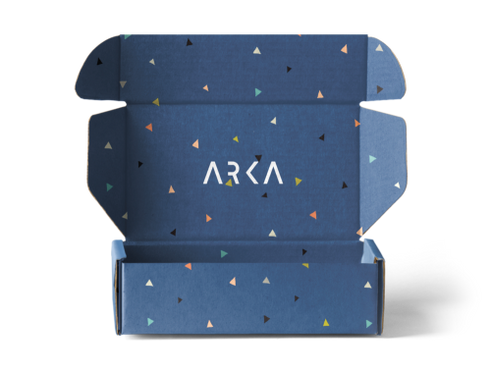
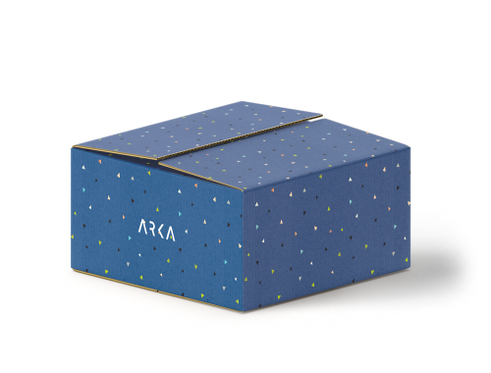
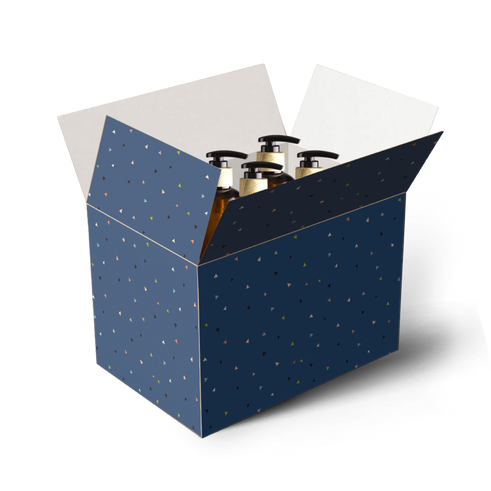
Secondary packaging groups, protects, or presents one or more units of primary packaging. For example, it can take the form of retail boxes, folding cartons, gift boxes, and mailer boxes.
Businesses can make use of secondary packaging as a means of providing extra protection while at the same time giving their products a branded appearance.

Tertiary Packaging
Tertiary packaging is primarily employed for transport, handling, and distribution; examples of it are shipping cartons, pallets, crates, and other bulk shipping services.
Tertiary packaging, unlike primary and secondary packaging, is usually more concerned with logistics than with the consumer experience.
The three categories explain the role of the packaging. The 15 types listed below refer to the various packaging formats and solutions used in different industries.

Credits: Toby Stodart
15 Different Types of Packaging
1. Cardboard Boxes
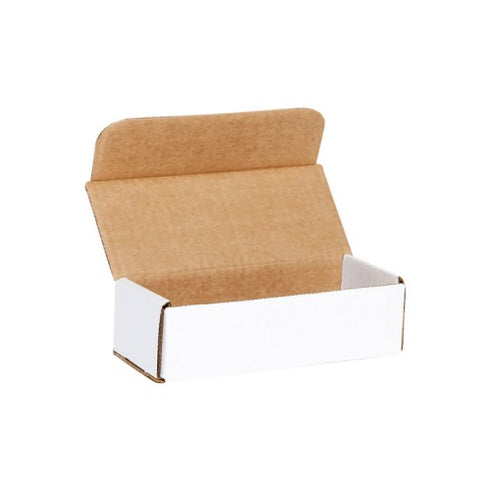
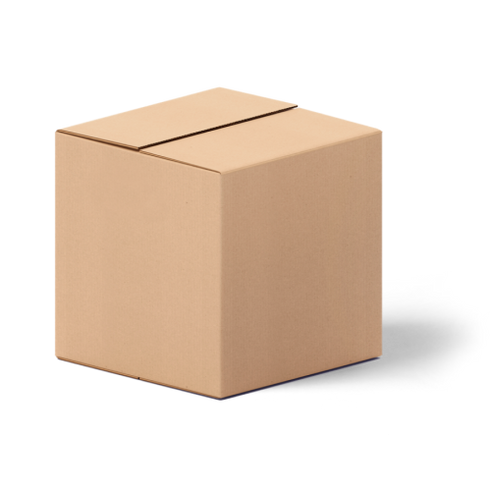
Cardboard boxes are one of the most commonly used methods of packaging. They are available in a variety of sizes and designs and are often used in retail, online shopping, storage, and for shipping.
For ecommerce businesses, cardboard boxes can achieve a balance between protection, branding, and shipping efficiency.
For ecommerce businesses, cardboard boxes are able to achieve a balance between protection, branding, and shipping efficiency; custom shipping boxes are especially useful when it comes to products that need a more robust outer package during transportation.

Credits: EJ Li
2. Plastic Containers
Plastic containers are used in a number of industries, including the food, cosmetics, healthcare, and household product sectors.
They are lightweight, durable, and resistant to moisture. Moreover, various types of plastic offer different degrees of flexibility, transparency, chemical resistance, and barrier protection.
Plastic is not inherently sustainable or unsustainable; the effect it has on the environment depends on various factors, including the type of plastic, the amount of material used, whether it can be reused or recycled, and the availability of disposal facilities.

Credits: Syed Hussaini
3. Glass Bottles and Jars
Glass is commonly used for packaging beverages, sauces, cosmetics, perfumes, skincare products, and other similar items.
Glass is rigid, nonporous, and can therefore give a premium look to products. It can likewise provide useful barrier properties for some products.
The principal drawbacks are its weight and brittleness. Since glass is heavier than a number of other materials, more energy is needed for transportation, and the material has to be handled with care.
Credits: Thomas Park
4. Corrugated Boxes
Corrugated boxes consist of several layers of paperboard, one of which is a fluted inner layer that gives them extra strength and acts as cushioning.
They are commonly used in ecommerce and shipping since they provide good protection and at the same time are rather lightweight.
Corrugated boxes can likewise be customized in terms of their dimensions and printing styles and are therefore useful to businesses that ship products directly to customers.

Credits: CURVD®
5. Folding Cartons
Folding cartons are lightweight packages made from paperboard which fold to form a complete box.
They are often used in the case of retail products, cosmetics, food, personal care products, and other consumer goods.
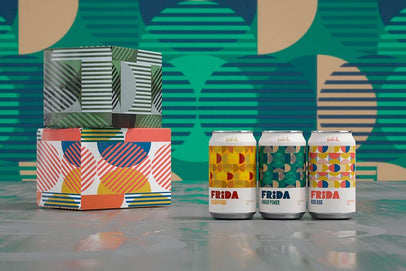
Their printable surface makes them especially useful when shelf presentation and branding matter. Custom folding cartons can be designed around a product’s dimensions and presentation requirements.

6. Bubble Wrap and Protective Cushioning
Bubble wrap is not a product container by itself but a protective packaging material that cushions the items and reduces damage from impact when they are being handled and shipped.
Other ways of providing protection are paper padding, foam, air pillows, and corrugated cushioning.
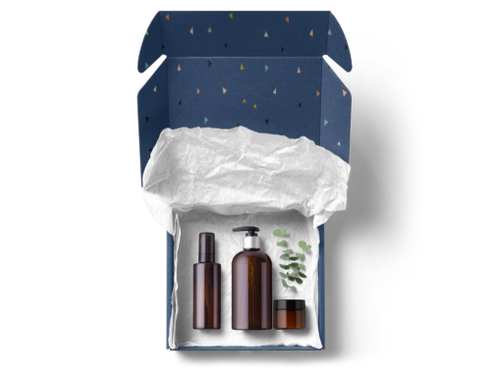
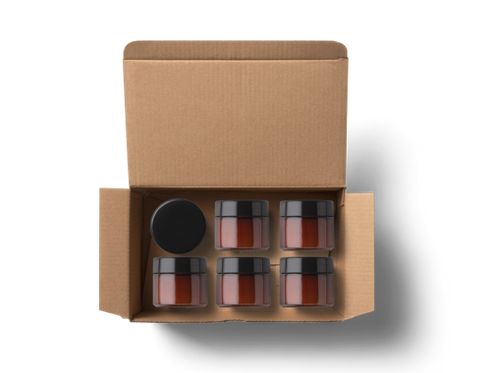
For items that require a more structured form of protection, custom inserts can secure the products within their packaging and reduce movement when they are being shipped.
Brands can also use packaging insert ideas for thank-you messages, product information, promotions, care instructions, and other elements that enhance the unboxing experience.

7. Poly Mailers
Poly mailers are lightweight and flexible envelopes used for shipping apparel, textiles, accessories, and other items that do not need a rigid outer box.
They occupy less room than boxes and have the advantage of being resistant to tearing and moisture. Moreover, custom poly mailers can be printed with the brand's colors, logos, and other graphics.
Poly mailers aren't suitable for all products; fragile or rigid items might require a box or extra internal protection.

8. Shrink Wrap
Shrink wrap is a thin film of plastic which, when heated, fits tightly around a product or a number of products.
It can help to keep the products together while guarding them against dust, dirt, moisture, and handling.
Shrink wrap is used in a number of industries, such as retail, food, cosmetics, and manufacturing. Yet, when choosing it for a packaging system, businesses should take into account the possible end-of-life options of the material.

Credits: Stream Peak
9. Bubble Mailers
Bubble mailers consist of a flexible outer envelope together with an inner cushioning layer.
They are usually used when more protection is needed than a standard mailing envelope can offer, for example with respect to books, accessories, small electronic items, and other light goods.
The choice of bubble mailer will depend on the size of the product, how fragile it is, and the shipping requirements. Just as with other types of flexible plastic packaging, the question of whether it is recyclable depends on the material and the local recycling facilities.

10. Labels and Stickers
Labels and stickers are not independent containers, but rather important parts of the packaging.
They are able to provide information about products, details regarding shipping, instructions on handling, branding, or promotional messages.
Custom stickers can add branding to simple packaging without printing the whole package.
It is especially important to use labels when packaging has to give out information like that concerning ingredients, the instructions, the barcodes, or the regulatory details.

11. Custom Inserts
Custom inserts are put into the packaging in order to hold the products in place, keep them separated, or protect them.
They can prevent the products from shifting about within the box and give a more structured appearance when the package is opened.
Inserts can likewise be included as part of the unboxing experience; for instance, a brand might combine a product insert that fits with printed messaging or promotional materials.
People who want inspiration may look at various packaging insert ideas such as thank-you cards, product samples, feedback cards, care instructions, and promotional messages.

12. Paperboard Packaging
Paperboard is suitable for use in a variety of packaging applications such as cartons, sleeves, trays, food packaging, and other lightweight ones.
It is generally lighter and thinner than corrugated board, making it more suitable for products
Since paperboard offers a good printing surface, it is often used for retail packaging because the visual appearance is important.

13. Sustainable Packaging
Sustainable packaging isn't a single type of packaging; rather, it refers to packaging that has been designed with environmental considerations such as material efficiency, the use of recycled materials, recyclability, reusability, or proper management of disposal at the end of its life.
For example, a light-weight package that uses considerably less material might have different environmentally friendly advantages over one that is heavier and made from recycled material.
People should not regard expressions like "eco-friendly", "green", or "biodegradable" as general signs of sustainability since the real environmental benefits vary according to the material, the product system, and the conditions under which the product is disposed of.

14. Cans and Tubes
Cans and tubes are used for a variety of products such as food and beverages, cosmetics, personal care products, and household goods.
Metal cans offer good protection and barrier properties, whereas tubes are convenient for those products which require controlled dispensing.
Aluminum and steel are also well-established packaging materials with recycling systems in many different markets, even though the actual rate of recycling varies according to the local arrangements for collection and processing.

15. Flexible Pouches
Flexible pouches are lightweight packages which are made from flexible films or from laminated structures.
They are usually used in connection with food, snacks, sauces, cosmetics, household products, and other consumer goods.
Pouches use only a small amount of material and take up less space during transport and storage. However, not every type of flexible pouch is recyclable or compostable, especially when it has multiple bonded material layers.
When selecting a pouch, consider its barrier needs, durability, printing requirements, and realistic end-of-life options.

Packaging Types by Industry
Different industries need different types of packaging.
Ecommerce packaging must not only protect the products during fulfillment and delivery but also help to create a branded customer experience.
Available choices are custom mailer boxes, custom shipping boxes, custom poly mailers, and protective inserts. When looking at the various formats, shops may also consider custom ecommerce packaging.
Food Packaging
Food packaging must take into account the need for product protection, hygiene, handling, and the relevant food-contact requirements.
The kinds of packaging available are boxes for food, boxes for bakeries, pouches, trays, containers, and wraps.
Shops have the opportunity to obtain specially designed food packaging for use in a variety of food-service and retail situations, such as custom food boxes, custom bakery boxes, and custom treat boxes.
Retail Packaging
Retail packaging must not only protect the products but also convey the brand when the products are on shelves or in stores.
Custom retail boxes and folding cartons can be used as printable surfaces for logos, product information, graphics, and other branding elements.
Gift Packaging
The way gifts are packaged puts a greater focus on how they are presented and on the experience of unboxing them.
A more memorable presentation can be achieved by combining custom gift boxes, tissue paper, stickers, and other packaging accessories.
In order to improve the appearance, brands have the option of using specially designed tissue paper to wrap the products inside the boxes or adding another layer featuring the brand to the order.
Custom packing tape can not only aid in securing the packages during shipping but also be used for branding.
How to Choose the Right Packaging Type
Given the large number of choices, it can seem difficult to choose packaging. Begin by posing yourself a number of practical questions.
What Are You Packaging?
Identify the product's dimensions, weight, shape, fragility, and special requirements.
How Will It Be Sold?
The packaging of a product available in a physical store can be different from that of a product shipped directly to customers.
How Much Protection Does It Need?
Think about the conditions that your package will have to go through. In the case of fragile products, you should use suitable cushioning, inserts, dividers, or a more robust outer package.
What Is Your Budget?
The costs associated with packaging go beyond the price of the package itself; you should take into account the costs of printing, the use of protective materials, storage, fulfillment, and shipping.
How Important Is Branding?
If branding is included in your marketing strategy, then you should think about the places in which it will be displayed. The boxes, mailers, tissue paper, stickers, tape, and inserts can all contribute to a consistent brand experience.
What Are Your Sustainability Goals?
Rather than selecting packaging just because it is marked as sustainable, consider its specific features, including material effectiveness, the amount of recycled content, recyclability, reusability, and the various disposal options.
Have You Tested It?
Before starting a large-scale production run, you should always test the packaging with the real product. Make sure to check the fit, the level of protection, the durability, the appearance, and the customer experience.
Final Thoughts
There isn't a single type of packaging that is suitable for all products or businesses; the appropriate choice will vary according to the product being packaged, how it will be handled, the places where it will be sold, and what your customers expect.
Every option, ranging from cardboard and corrugated boxes to poly mailers, folding cartons, inserts, pouches, and protective materials, has its own advantages and disadvantages.
The best choice balances product protection, functionality, branding, cost, shipping efficiency, and sustainability.
If you need custom packaging, then look at the packaging choices available from Arka in the areas of boxes, mailers, inserts, food packaging, and packaging accessories, or ask for a quote on custom packaging according to your product and requirements.